
Brevard Scheduled and Actual Release
Florida's public systems use terms that must be read with care. On an FDC current-inmate detail, the visible field is Current Release Date. Florida Statutes § 944.275 calls the computed projection a tentative release date. A future date in that field is a working calculation. It is not proof that the prisoner has left custody. The actual event is checked later in FDC's Inmate Release Information Search.
A current detail may show a calendar date, SENTENCED TO LIFE, or TO BE SET. Each label answers a different question. A date can move as credits, forfeitures, added sentences, or holds are processed. A life label does not create an ordinary calculated release point. To Be Set means the public record has no date to report at that time.
Pretrial custody at the Brevard County Jail Complex works differently. A person held before disposition does not have a sentence-based projection. Bond, a judge's order, case resolution, and a detainer from another authority may decide when county custody ends. Even after BCSO marks a booking Released, a transfer to FDC, ICE, USMS, or another county can continue custody elsewhere.
Find Brevard Projected Release Dates
Start by identifying the custody system. Someone serving a Florida state-prison sentence belongs in FDC records. A person who served a misdemeanor or shorter county sentence only at Camp Road may never enter the state inmate population. A Brevard booking followed by commitment to state prison should be checked through FDC for the state release date.
- Open the FDC Offender Search menu and choose Inmate Population Information Search for a current state prisoner.
- Use the DC number when known. Otherwise search the full name and compare birth date, photo, aliases, sex, race, and incarceration facts.
- Open the matched record and read Current Release Date. Treat any future date as tentative.
- After the stated date or event, use Inmate Release Information Search to see whether FDC records an actual release.
- For a county jail sentence, obtain the sentencing order through the Brevard clerk and ask BCSO Inmate Records for the scheduled release or method field.
The Brevard County released-inmate records path helps match a BCSO booking number and court case before the state search. Do not calculate a date from the booking day alone. Time credited by the court, the sentence structure, holds, and county gain-time administration are not all visible on the public booking detail.
The official FDC menu visibly separates current inmates, released inmates, supervised people, and absconders.
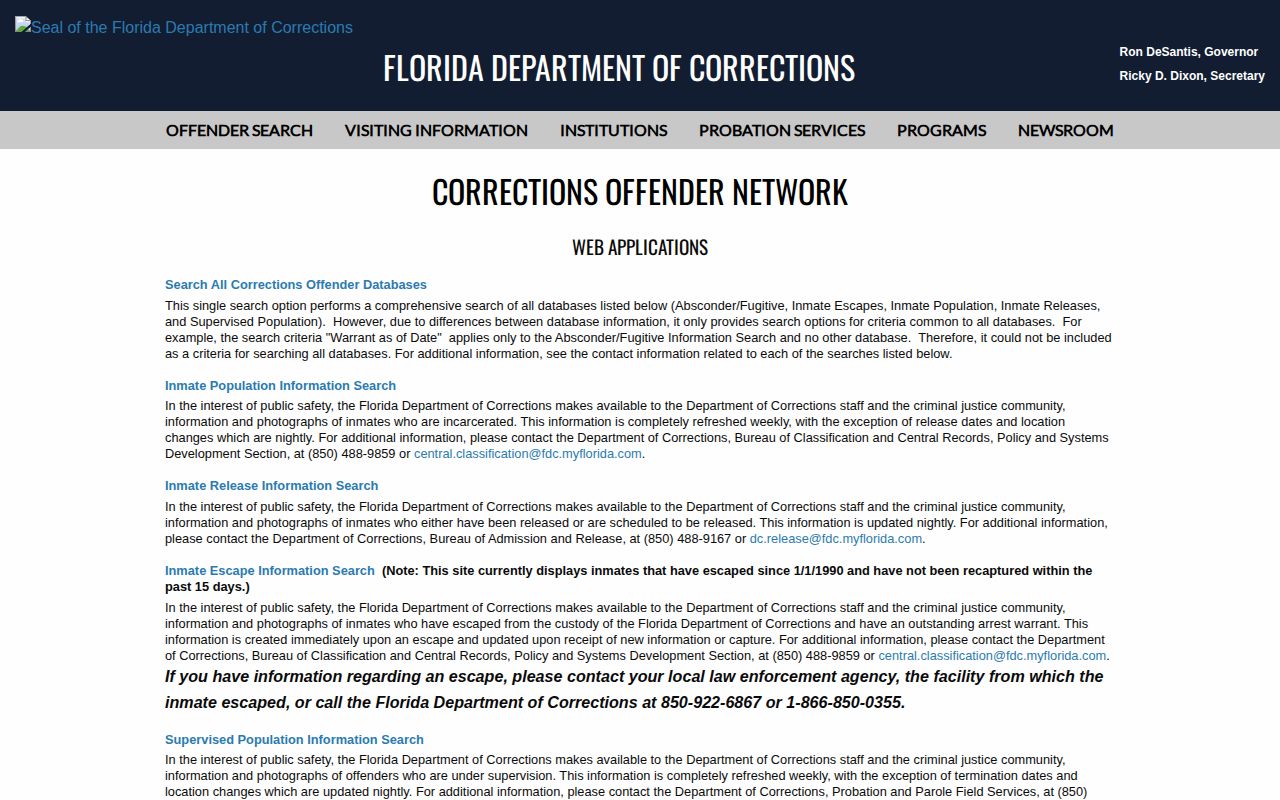
Choosing the matching population prevents a missing current-inmate result from being misread as proof of release.
The current FDC inmate search is the correct entry for a person who is still serving a state sentence.
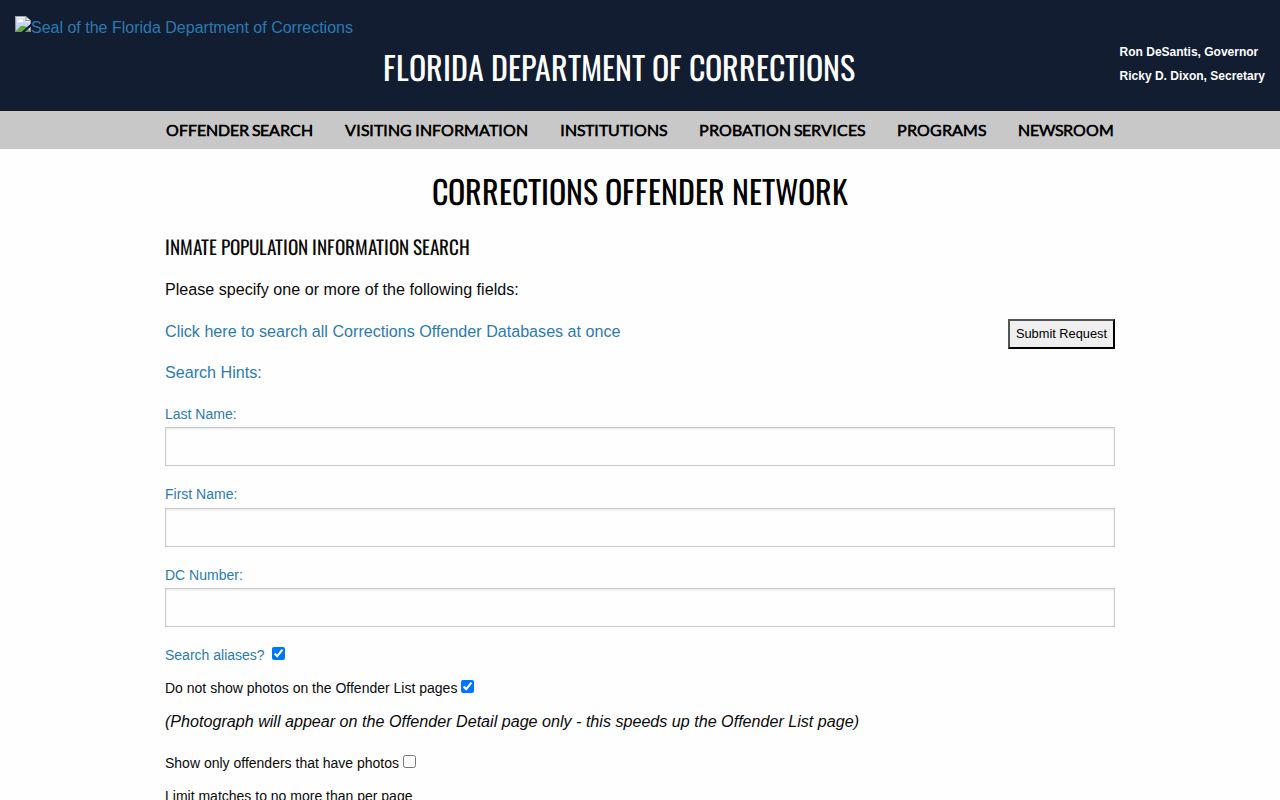
After matching identity there, open the detail to read the date field and return later to the release-specific search for confirmation.
Note: FDC says release dates and location changes refresh nightly, while most inmate data and photographs refresh weekly.
Florida State Release Computation
FDC first determines the maximum sentence expiration date. It combines imposed sentence terms, subtracts lawful jail and prison credit, and accounts for added sentences. Time outside custody through escape or a parole violation can extend the term. FDC then applies gain-time that was granted or restored to calculate the tentative release date, while forfeited gain-time moves the projected point later.
Gain-time rules vary by offense date. The Florida gain-time statute, § 944.275, contains multiple historical regimes. Some pre-1994 offenses had basic gain time or incentive awards up to 20 days per month. Certain 1994 to 1995 offenses used severity-level schedules with awards up to 20 or 25 days. For qualifying offenses on or after October 1, 1995, incentive gain time can be up to ten days per month. Enumerated serious offenses may be ineligible, and educational or meritorious awards have separate rules.
For the post-October 1, 1995 framework, subsection 944.275(4)(f) prevents gain-time from producing release before 85 percent of the imposed sentence has been served. Court-awarded physical jail credit counts toward that measure. This is a floor, not a promise that release will occur at exactly 85 percent. A mandatory minimum, ineligibility, forfeiture, disciplinary action, a new or consecutive sentence, recalculation, detainer, or life sentence can make the date later or prevent an ordinary date.
The statute image shows the official source used for Brevard state-prison projections.
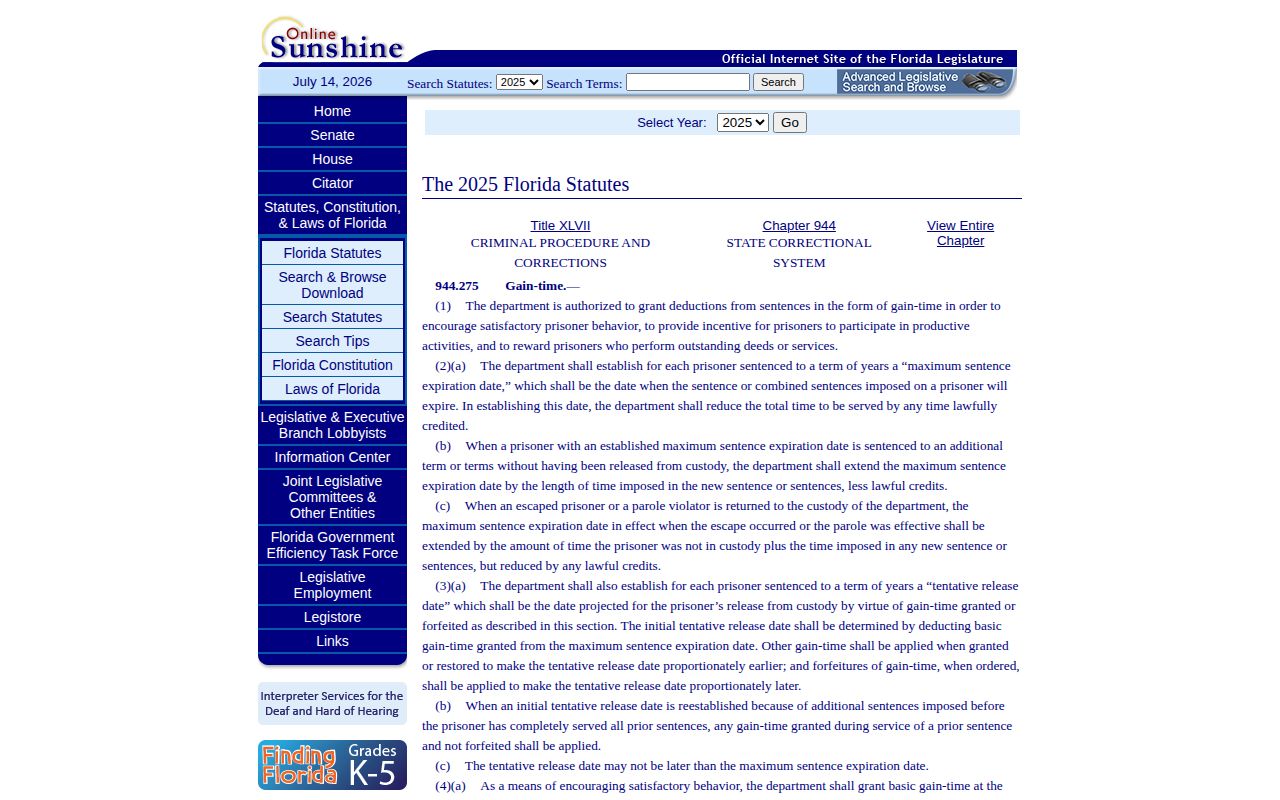
Because historical rules differ, the current public date and the person's actual sentence record should control rather than a hand calculation.
Why Brevard Release Dates Change
A projected release date reflects the facts and lawful credits entered at the time of calculation. New information can move it. Some events alter the sentence itself. Others affect the point at which a person may leave the current facility or whether another agency takes custody next.
| Factor | Possible effect | Record to check |
|---|---|---|
| Gain-time grant or restoration | May move a tentative state date earlier within statutory limits | FDC inmate and sentence record |
| Forfeiture or discipline | May move the date later | FDC calculation and disciplinary record |
| Jail credit or corrected sentence | Changes the base expiration calculation | Court order and FDC admission record |
| New or consecutive sentence | Can extend the maximum expiration date | Court judgment and sentence history |
| Detainer or warrant | May cause transfer rather than community release | Holding and receiving agency records |
| FCOR action | May set, modify, defer, suspend, or rescind a parole date | Commission order, not just an agenda |
A detainer is a request or notice that another authority may take custody. It does not always rewrite the FDC sentence date, but it can change where the person goes at release. Likewise, a presumptive parole release date or effective parole release date is not the same as an FDC release record. The order and after-the-event search must be read together.
Confirm Brevard Actual Release
Once a future date arrives, search the matched person in FDC Inmate Release Information. That search is designed for people released or scheduled for release and updates nightly. Read the identity, DC number, release date, photo, sentence history, and incarceration history. The public released detail does not always name the legal release mechanism, so request the admission-and-release record or FCOR order when the distinction matters.
Then check FDC Supervised Population. Prison release and discharge from all supervision are separate events. The supervision record can show Current Status, Supervision Type, Current Location, and Scheduled Termination Date. A released record stops updating after release, so it cannot replace the live supervision result.
For a pending event, Florida VINE can provide an alert based on the reporting agency's custody feed. Registration and identity checks are detailed on the Brevard VINELink inmate search. An alert is useful notice, but it does not certify the legal release type or rule out a transfer to another authority.
Note: A no-result in a current-custody search does not prove release; use the release-specific result and originating records office.
Brevard County Jail Gain-Time
A county sentence uses a different framework. Florida Statutes § 951.21 authorizes county-prisoner good-conduct gain-time unless the Board of County Commissioners discontinues or revises the policy. The statute allows up to five days per month in the first and second years, up to ten days in the third and fourth years, and up to fifteen days in the fifth and later years, subject to conduct and forfeiture.
Those numbers do not authorize a public estimate for a person at Camp Road. The judgment, jail credit, concurrent or consecutive terms, holds, local policy implementation, and forfeitures all matter. BCSO's public detail does not display a county projected date. Request the scheduled release or release-method field from Inmate Records and obtain the sentencing order from the Brevard clerk.
The county statute provides the legal framework behind that records request.
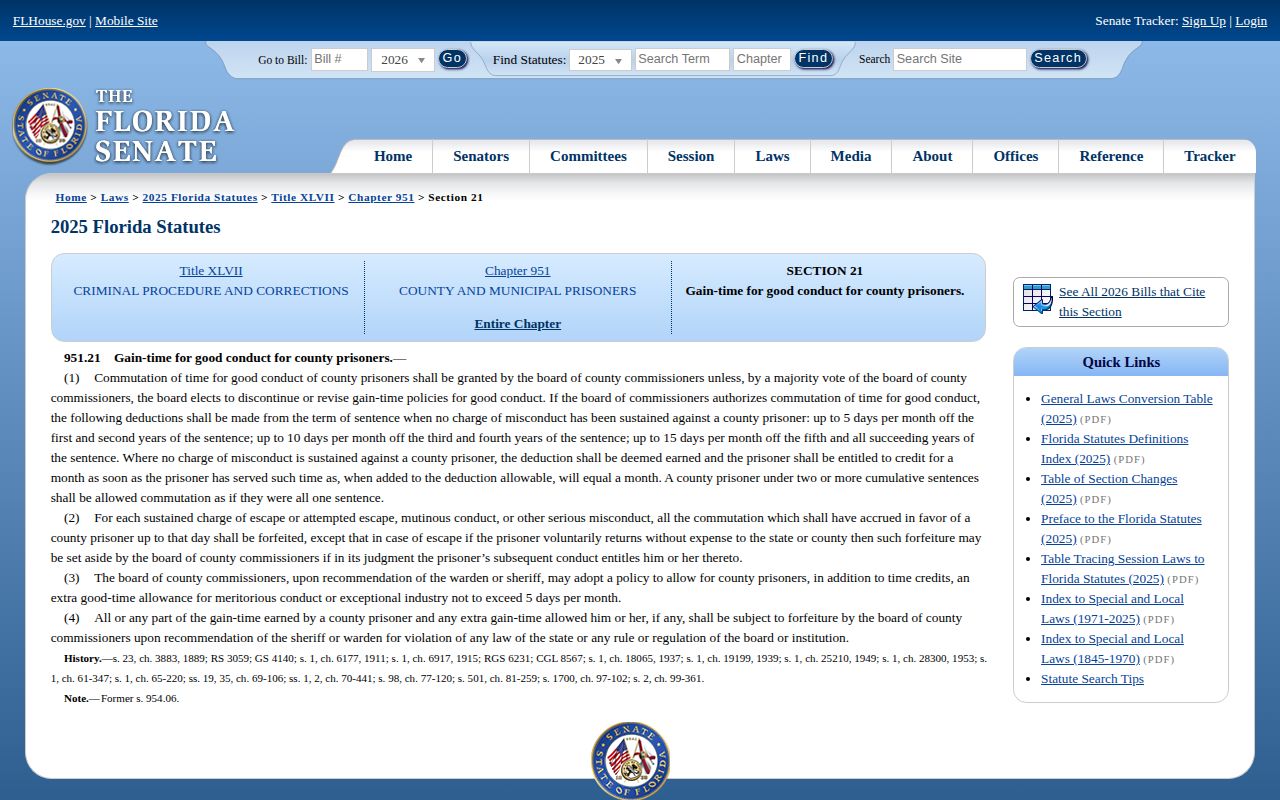
The official calculation remains with the jail and court record, not a date produced from the booking page.
Brevard County Release Record Chain
A county-sentence date requires more than one record because the public BCSO detail is built around the booking, not the full sentence calculation. Start with the booking number and case or docket number. The booking detail can confirm that the person was held at Camp Road and can later display Released: Yes with a date. The Brevard Electronic Court Application can supply the judgment, sentence, credited jail time, amendments, and orders that affect the term. BCSO Inmate Records is the source for the scheduled release or release-method field maintained with the jail record.
Ask each office for the part it owns. The Clerk can provide the sentencing order and later court action. BCSO can respond about county jail custody and its own release record. FDC should be used only if the person was committed to state custody. A short or misdemeanor sentence served entirely at the county jail may never appear in FDC's inmate population. Conversely, once a Brevard defendant is transferred into a state-prison sentence, the state Current Release Date becomes the relevant public projection.
The records should also be checked for holds. A court release order can end the Brevard basis for confinement while an outside detainer still directs a transfer. In that setting, the scheduled end of county custody is not a promise that the person will enter the community. Request the release authority and destination when the booking detail does not state them.
County and state records have distinct update patterns. BCSO warns that booking information changes quickly and may not be current, but it does not publish a web update interval. FDC says its release dates and location changes refresh nightly. A practical check therefore uses the originating office close to the expected event, then repeats the official release search after the date rather than relying on a saved screen.
Brevard Current Release Date Label
The wording difference between the public screen and the statute is easy to miss. Look for Current Release Date on the FDC detail. Florida law calls the computed future projection a tentative release date. The two phrases refer to the public display and its statutory calculation, not two independent release promises.
The official FDC detail example shows the exact public label.
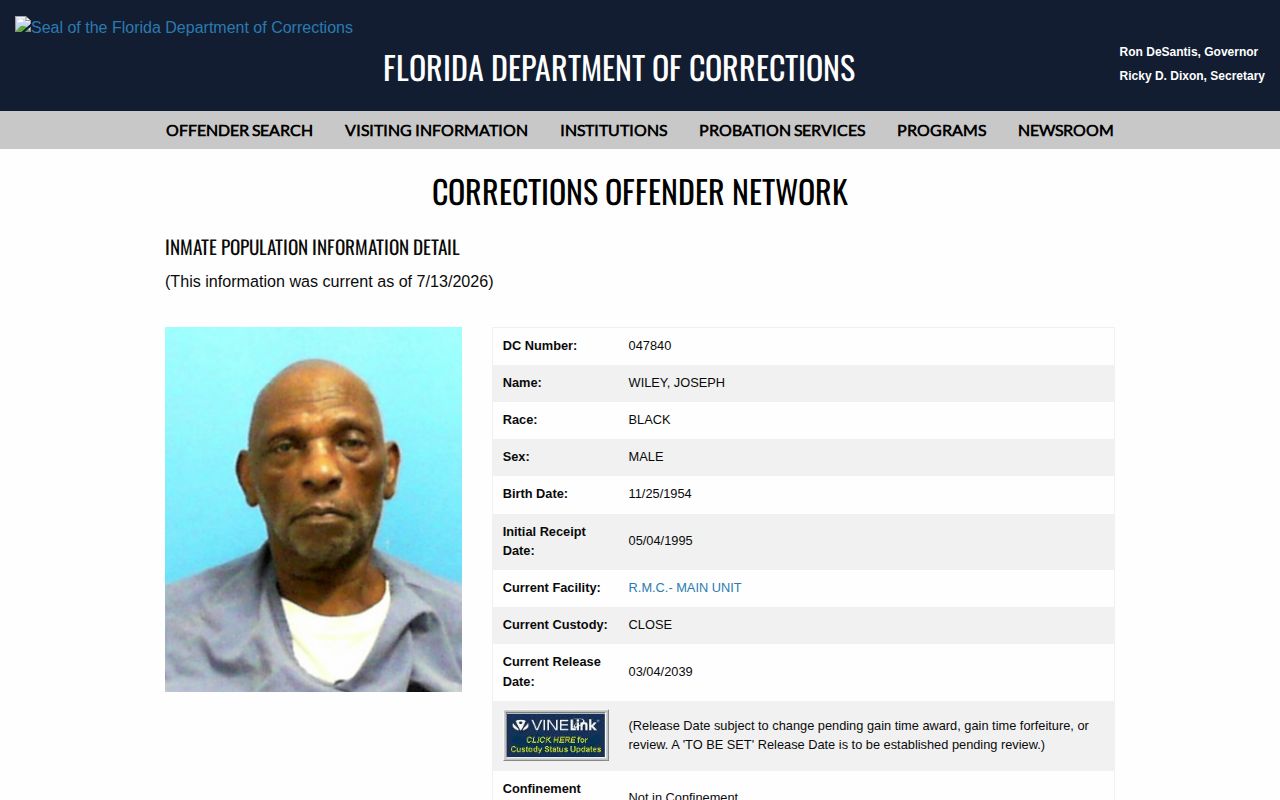
After that future date, move to the nightly Inmate Release Search to determine whether the departure was recorded.