
Brevard 72-Hour Release Records
The Brevard County Sheriff's Office has a general person and booking search. It has no released-only control and no labeled 72-hour list. Its From Date and To Date fields are not described as release-date filters. Treating them as a three-day discharge feed could omit people or count the wrong event date.
BCSO retains historical released details for at least some people. A matched booking may show Released: Yes and a date, along with booking facts, a mugshot, bonds, charges, court data, and earlier booking history. That is useful for a known person. It cannot reliably enumerate every person whose county booking ended during one weekend.
Check Brevard Three-Day Releases
Choose the route based on the question. For one named person, use the public detail and confirm the exact booking. For the whole 72-hour interval, request the agency record. The Brevard County released-inmate search provides the full named-person route when court or receiving-system checks are also needed.
- Define the window with an exact date, start time, end date, and end time. State the time zone if it could be unclear.
- Ask BCSO for the three Commitment and Release Lists, GS2 Item 22, or an extract covering that span.
- For a known person, search by booking or subject number and open the detail. Match identity and booking date.
- Record the released date, booking number, case number, bonds, and any available release information.
- Confirm an uncertain reason, time, or destination through the Inmate Records Unit and any likely receiving agency.
The Inmate Records Unit is available at 321-690-1546. The 24-hour jail information line, 321-690-1501, can help with changing charges, bonds, and court dates. Neither a name dropping from a live view nor an expected court event establishes the final release destination.
When the public detail says Released: Yes, preserve the displayed date and booking number before contacting the records unit. Those two facts help staff distinguish the current event from an older booking attached to the same subject. If the detail lacks a destination, ask directly whether the person went to the community, FDC, another jail, ICE, USMS, or another named authority. A complete answer should be tied to the booking, not merely the person's name.
Brevard Three-Day Record Fields
Florida's record schedule describes possible fields for a Commitment and Release List. BCSO may not store or release every optional field in one format. A focused request should identify the information needed and the exact time span.
| Field | Use in a 72-hour review |
|---|---|
| Identity and demographics | Separates namesakes across the period. |
| Booking number | Links each release to one custody episode. |
| Booking date and time | Shows when county custody began. |
| Release date or time | Places the event inside the request window when maintained. |
| Charge, court, and bond | Connects the booking to the case without proving final disposition. |
| How released or return date | May describe the method or a required return. |
The confirmed public detail gives only a released date, not the departure time, single release reason, or destination. Ask for the full record tied to the booking when those facts matter. A bond row may describe one charge without telling why the booking finally closed.
Brevard Weekend Release Windows
A three-day request can span Friday evening through Monday evening or another exact period that crosses a holiday. This avoids a calendar-day assumption. The Sheriff does not publish a fixed update cadence, and its database warning says rapidly changing facts may not be current. A posting that appears later does not change the actual event time held in the agency record.
Bond can be posted around the clock, but discharge may take several hours while staff complete required checks. There is no published fixed release hour. A person expected to leave late one day might have a recorded release on the next date. Exact timestamps are vital when the window boundary matters.
For a same-day focus, the Brevard County 24-hour release route explains the narrower request and local exit logistics. The three-day path should stay wide enough to include the full period without guessing from a web update.
Verify Brevard Release Destinations
A county released flag proves only that the BCSO booking ended. Some people return to the community after bond, pretrial release, time served, sentence completion, or a court order. Others transfer to FDC, ICE, the U.S. Marshals Service, another county, or another authority.
| Possible event | Verification route |
|---|---|
| Community release | BCSO release record and court docket |
| State-prison transfer | FDC current inmate search, then release search after discharge |
| Federal custody | BOP locator, federal docket, or holding agency |
| Immigration custody | ICE Online Detainee Locator and destination field |
| Another county | The named receiving jail or records office |
VINELink can report a custody change for a matched person, but it is not a permanent certified archive. A notice may reflect transfer rather than return to the community. The court case may outlast the jail display and can show the order, sentence, or later disposition.
FDC's search menu separates current inmates, released inmates, supervised people, and absconders. Use the current inmate search after a suspected transfer to state prison. Use the nightly updated release search only after a state discharge. A county-only sentence at the Brevard County Jail Complex may never create an FDC inmate entry, so a blank state result cannot erase the BCSO record.
Request Brevard 72-Hour Lists
Use the BCSO JustFOIA request portal to seek the exact record. Name GS2 Item 22, give the precise three-day interval, and ask whether the response consists of three daily lists or one extract. If destination or release method is essential, say so.
The official request portal screenshot shows the agency route used for a Brevard release-record request.
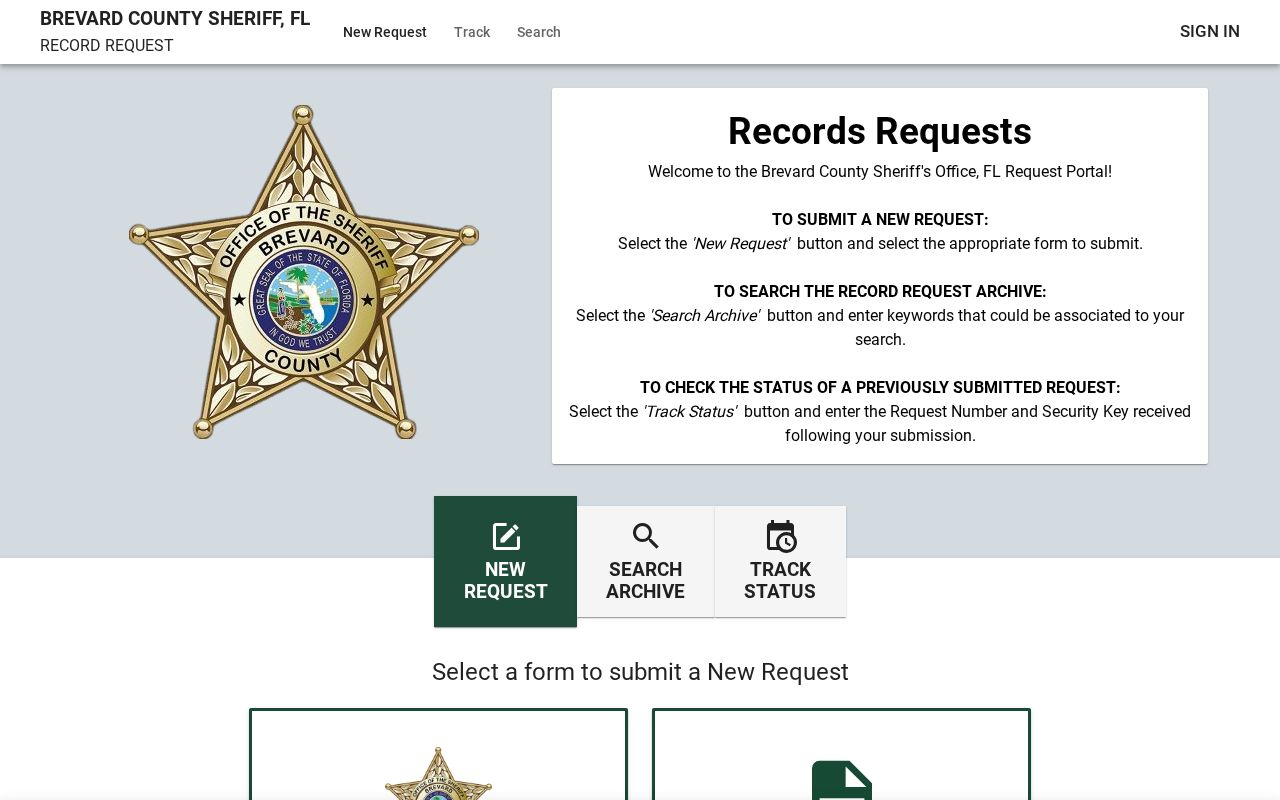
The portal is a request channel, not a live feed. Keep the submission confirmation and clarify any date or field question from the records office.
GS2 sets a minimum retention of one anniversary year after release for Commitment and Release Lists. That rule governs the custodian's record. It does not promise that the public detail will remain searchable for the same period, even though some BCSO histories reach farther back.
Note: A defined 72-hour request is more complete than search results from date fields BCSO does not label as release filters.
Brevard Release Retention Gap
Brevard has a useful split. There is no labeled recent-release feed, yet Florida formally defines and retains the daily record that such a feed would draw from. The public search may preserve an old booking detail, but BCSO gives no web-retention guarantee.
This gap changes the best method. A person search is efficient when identity is known. A record-series request is stronger for a complete period. Save the booking number and request window because they let staff locate the right material without relying on a public page that may change.
The retained list and the online detail also answer different questions. A daily list is built around a period and may identify all bookings and releases within it. A person detail is built around one subject and can preserve prior custody history. Use the daily series to review the full 72-hour span, then use individual details to check identity, booking facts, bonds, charges, and court numbers. Neither source alone guarantees a release destination.
Florida also requires minimum retention for booking records and inmate incarceration records, while jail docket books that summarize prisoners are permanent. Those rules do not force BCSO to publish each record on the internet. A requester can cite the relevant dates and booking numbers, describe the records sought, and let the custodian identify the responsive format. If the office says no single 72-hour extract exists, three daily lists still cover the requested window without inventing an online feed.
Brevard Three-Day App Limits
BCSO's official mobile app has historically offered arrest and mugshot access, but the current store description does not promise a 72-hour release window. An inmate lookup is not the same as a released-only list. Do not count app results as a full three-day set unless the live app displays a clear release filter and window.
The official Android app listing identifies the current Sheriff app.
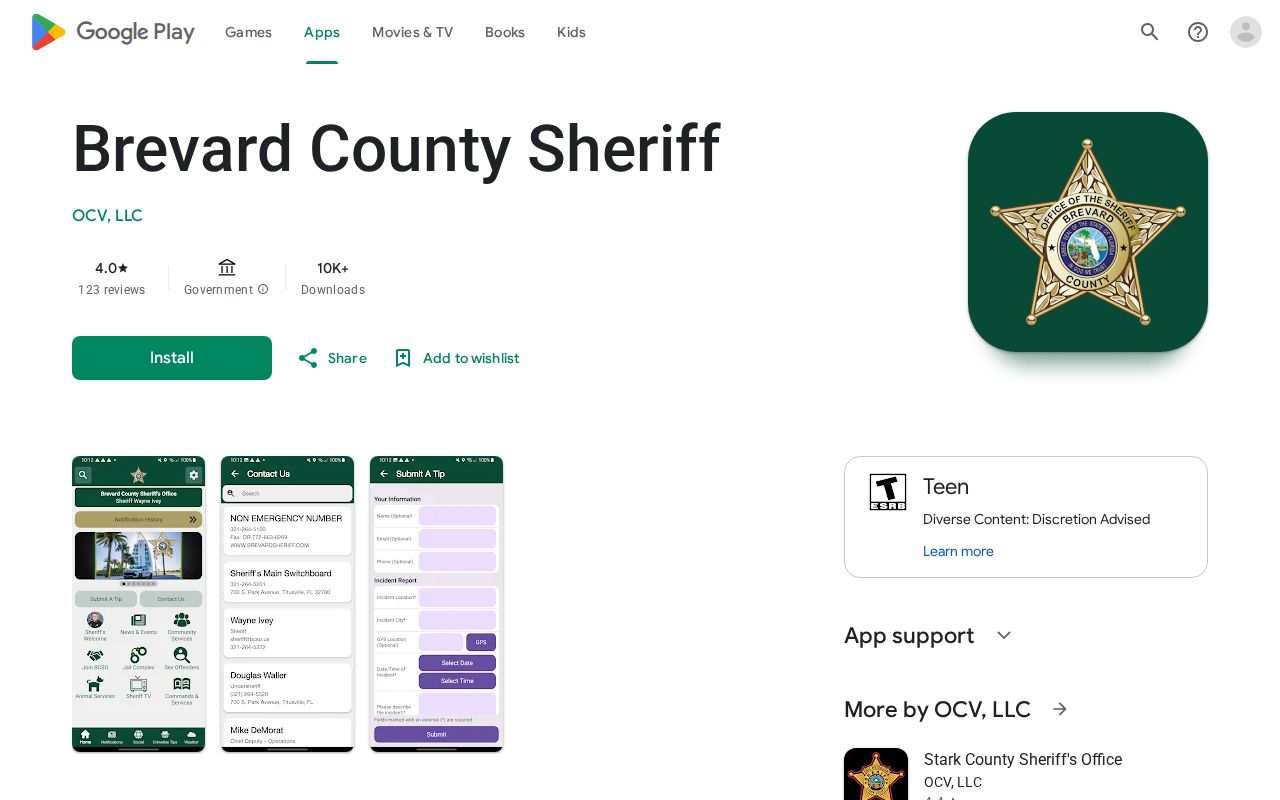
The image confirms the official app channel. It does not establish a rolling release feature, so the record request remains the defensible three-day route.
App information should be checked against the same source hierarchy as web information. An arrest or inmate feature may show that a person was booked, while an individual detail or notice may show a later custody change. Neither proves that every release in the chosen period appears in the app. For a complete weekend set, keep the exact records request as the lead method and use the app only to help locate a known person.